



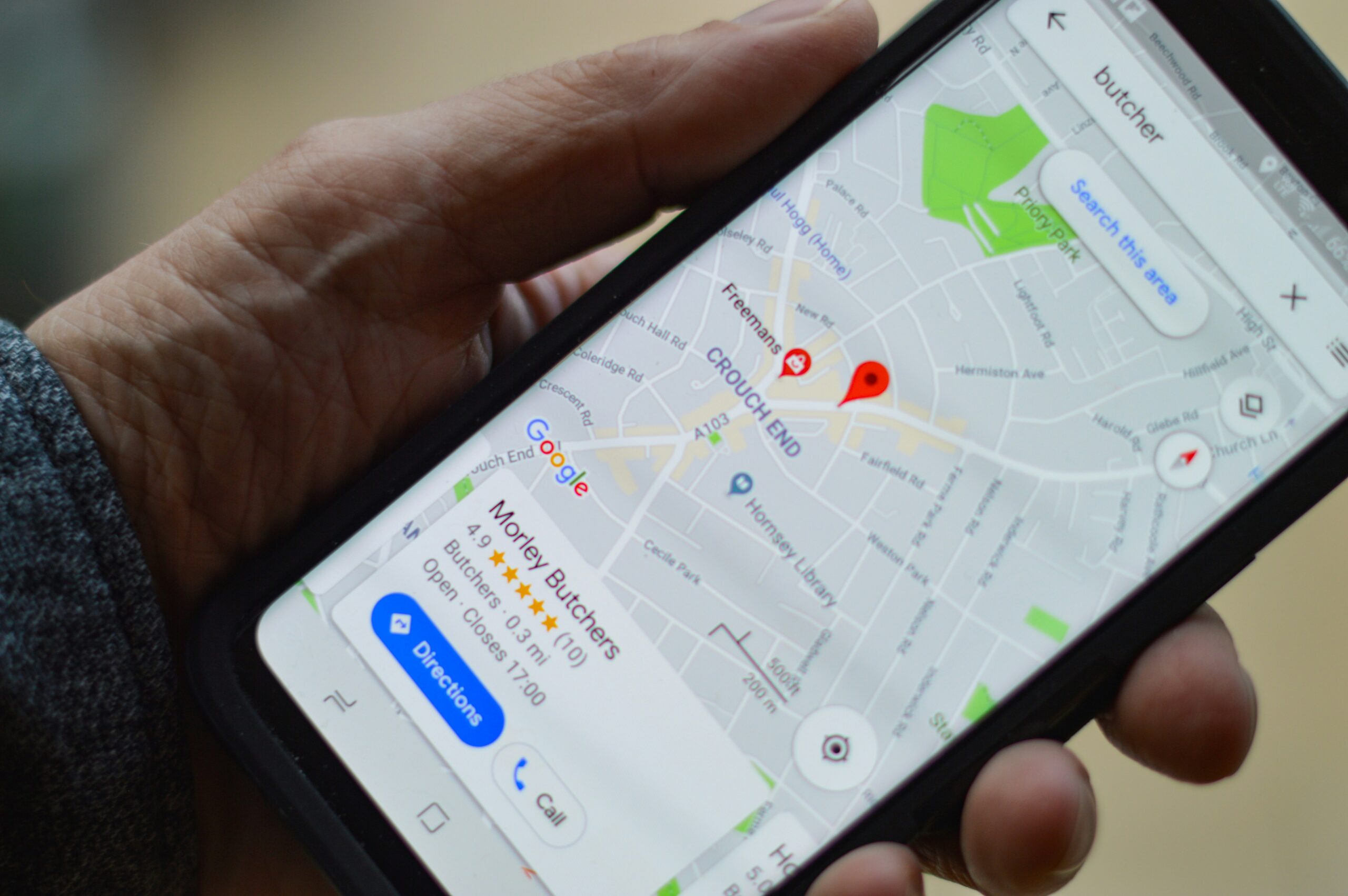

Consider for a moment how you locate a local business these days. You’re looking for a plumber, dentist, electrician or restaurant and you likely have your phone out searching for the closest and most reputable. The businesses that show up in Google Maps, local search and business listings with reviews and good information are the ones that will get your attention in most cases.
This change has altered the way that customers are found online for small businesses. A good website design is still important, but there’s a lot more to being visible locally than just showing up for a local keyword. Search engines calculate the businesses’ relevance to searchers in the vicinity, based on business attributes like customer reviews, location signals, citations, website relevance, and credibility.
The problem is, however, that many local businesses continue to use traditional methods, while other companies further enhance their web presence. Consequently, people tend to seek and reach out to other businesses first even when a better business is available nearby.
This guide makes it easier to understand local SEO in 2026, explore the factors that can impact local ranking, and outline actionable steps that small businesses can implement to boost their visibility, attract targeted prospects and convert local searches into actual business opportunities. From law firms to dental practices, HVAC companies to real estate agencies and retail stores, you’ll discover how to establish your local presence and compete more effectively in your market.
Understanding what Local SEO is and how it works
Local SEO is the art of making your website show up in local search when consumers look for products or services near your business.
For example:
“Accountant in Dallas”
“Find the best pizza places around you”
“Rooftop repair firm in Miami”
“Home loan services near me”
“Best restaurant in Islamabad”
Local SEO places significant emphasis on the relevance of location and credibility of the business, unlike traditional SEO.
Local Pack vs Organic Local Results
Google will show you a map when you search for a “local service” listing, and the three business listings will be there at the top. This is referred to as the Local Pack or Map Pack.
Traditional results for organic search will be displayed below the map. Because users can see at a glance, the Local Pack tends to generate the best click-through rates:
- Reviews
- Business hours
- Directions
- Phone numbers
- Photos
If it appears here, then there are more chances for customer inquiries.
Relevance, Distance, and Prominence
There are three key factors that Google considers when ranking local businesses:
- Relevance
The similarity of your business to the searcher’s query.
- Distance
Distance your business is from the user’s location.
- Prominence
The visibility and credibility of your business on the internet.
Reviews, backlinks, citations, brand mentions and authority can all have an impact on prominence.
With traditional SEO, a national website can achieve ranks all over. Local SEO is not the same. Even a smaller local business can outrank larger businesses if it has a well-optimized Google Business Profile with consistent citations, reviews and location-specific content.
Local SEO can be one of the most lucrative marketing strategies for local businesses, which is why it’s so important. Small businesses have a vested interest in this SEO.
Most business people are concerned with driving more traffic to their websites. However, traffic is not a source of income. Local SEO aims to reach those who are willing to take action.
High Intent Searches convert better
Someone typing “best chiropractor near me” is near to making a decision than someone typing “what does a chiropractor do.” Local searches often indicate immediate intent. These users are seeking a solution.
Local SEO boosts business leads by providing:
- Phone calls
- Appointment bookings
- Store visits
- Form submissions
- Direction requests
A number of these activities are performed directly from Google Business Profiles, without a user ever having to visit a website.
Ignoring local SEO can lead to a lot of harm. If your business doesn’t bother with local seo you will encounter:
- Lower visibility
- Fewer leads
- Lost customers
- Reduced trust
Google Business Profile Optimization
The starting point of local SEO is your Google Business Profile (GBP). If you can only enhance one thing, do this one first. Claim and verify your profile to ensure that your information is accurate.
You lose control of important information if your profile isn’t claimed.
Be sure your:
- Business name
- Address
- Phone number
- Website URL
are accurate.
Optimize every section. Full profiles do better than partial profiles.
Focus on:
- Primary category
- Secondary categories
- Business description
- Services
- Products
- Service areas
- Operating hours
Many businesses halt their efforts at the initial setup. Those businesses that make the grade here, go far. Add photos regularly. Images build trust and engagement.
Include:
- Team photos
- Office photos
- Products
- Completed projects
- Before-and-after images
Improve GBP Engagement Using Google Posts and Q&A
A lot of companies establish a Google Business Profile but don’t update it. That’s an opportunity that’s lost, as an active profile provides Google and future customers with more indicators that your business is current, trustworthy, and active.
Google Posts are posts that can be created directly from your Business Profile. They are seen by people viewing your listing and could help potential customers understand what your business offers before they visit your website or call.
For most local businesses, posting once a week or whenever there is a major update is sufficient.
What Can You Use Google Posts For?
You can use Google Posts for:
- New service announcements
- Seasonal promotions
- Limited-time offers
- Upcoming events
- Company updates
- New products and service launches
Google Posts Examples
For instance, a dental office in your area may post:
New teeth whitening appointments are available this month. Make a booking today.
A restaurant could share:
Special menu available every Friday and Saturday on the weekend.
It’s not about advertising repeatedly. The goal is to provide searchers with useful information that helps them make a decision.
Best Practices for Google Posts
Some best practices include:
- Use clear headlines stating the benefit
- Add high-quality images
- Include a relevant call-to-action (CTA)
- Update expired promotions
- Post consistently rather than infrequently
If your budget is limited, focus on optimizing your Google Business Profile and building a strong review profile before investing heavily in link building.
Why the GBP Q&A Section Matters
The Q&A section is unique because it allows customers to ask questions directly on your Google Business Profile.
Common questions include:
- Are same-day appointments available?
- Do you provide emergency services?
- Is parking available?
- Do you serve nearby areas?
It is essential for businesses to monitor this section because unanswered questions can create uncertainty and reduce trust.
Add Your Own Frequently Asked Questions
You can also add your own frequently asked questions from a customer’s perspective and answer them proactively.
This helps users find important information before they contact your business.
Common GBP Mistakes
Avoid:
It is true that stuffing keywords in the business name.
- Using incorrect categories
- Ignoring reviews
- Outdated business hours
- Missing photos
These errors can restrict visibility and user trust.
This guide is updated with the latest trends in local SEO for 2026.
1. Tune for AI Answers, Not Just Local Rankings
In 2026, people will find local businesses through the AI-powered search experience rather than blue links. Google’s AI-powered results sort through several sources to make recommendations for businesses.
To improve visibility:
- Design a service page for each service
- Add frequently asked questions that answer customer questions
- Publish location-specific content
- Show proficiency using real life examples and case studies
- Maintain uniformity of information throughout the organization’s websites.
The focus is no longer on being #1. The objective is to get to the point where AI systems can safely reference you as a trusted local entity.The aim is to become the local trusted entity that AI systems can safely reference.
2. Google Business Profile
This is becoming increasingly crucial.Google Business Profile is becoming more and more essential. It is still the leading local ranking factor.
Focus on:
- Accurate business categories
- New services and products that are updated
Weekly photo uploads - Regular posts
- Complete business descriptions
- Updated hours
- Service areas
Active business profiles always outperform inactive business profiles.
3. Reviews have been integrated into the AI Trust Signals
Reviews are not only a ranking factor anymore.
AI systems analyze:
- Review quality
- Review frequency
- Terms of reviews.
- Customer sentiment
- Business responses
Rather than requesting customers to provide their reviews in general, ask them to include specific services, locations, and experiences.
Example:
Poor Review:
“Great company.”
Strong Review:
They helped in optimizing our Google Business Profile in Rapid city, USA and boosted the local leads within two months.
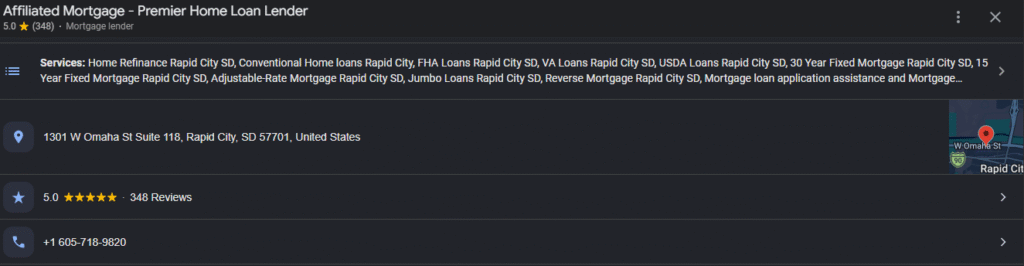
Local Business Affiliated Mortgage – GMBP
4. Create Topic Authority for Services
It’s now time for more than one service page.
Create content clusters:
- Local SEO Services
- Google Business Profile Optimization
- Local Citation Management
- Local Link Building
- Reputation Management
- Local SEO Audits
Google has become more likely to reward sites with authority on a specific subject. There is no point in having to submit to hundreds of directories.
Focus on:
* Consistent NAP (Name, Address, Phone)
* Industry-specific directories
* Trusted local directories
* Relevant business listings
Better and more reliable than many.
5. Local Link Building Strategies
This is a strategy that is still effective. Local links are still a powerful local ranking factor.
Acquire links from:
* Local newspapers
* Community websites
* Business associations
* Chambers of commerce
* Local sponsorships
* Event partnerships
Several quality local links can make up for dozens of low-quality backlinks.
6. Develop Location-Specific Landing Pages
For many businesses, having separate pages for each location is a must.
On each page, include:
* Unique content
* Local customer testimonials
* Area-specific information
* Service details
* Relevant FAQs
Do not repeat the information on more than one city page.
Use Local Schema Markup to Help Search Engines Understand Your Business
Schema markup is structured data that you add to your website to help search engines better understand important information about your business. It does not guarantee higher rankings, but it helps search engines interpret your content more accurately.
What Information Can Schema Communicate?
Local businesses can use schema to explain:
- Who they are
- What services they offer
- Where they operate
- How customers can contact them
- What customers say about their business
- Local Business Schema
LocalBusiness Schema provides basic business information such as:
- Business name
- Address
- Phone number
- Opening hours
- Website URL
Example Use Case
A local repair company can use Local Business Schema to help Google understand its exact location, contact information, and business details.
- Organization Schema
Organization Schema helps define and strengthen your brand identity.
It is particularly useful for businesses that have:
- Multiple locations
- Recognized brands
- A larger online presence
- Service Schema
Service Schema helps search engines understand the specific services your business offers.
Example Use Case
A law firm may define services such as:
- Personal injury law
- Family law
- Business law
- FAQ Schema
FAQ Schema helps search engines understand content that answers common customer questions.
Example
Question: Do you offer emergency plumbing services?
Answer: Yes, our team provides emergency plumbing support 24 hours a day, seven days a week.
- Review Schema
Review Schema helps search engines understand customer ratings, reviews, and feedback associated with your business.
Best Practices Before Implementing Schema
Before adding schema markup, make sure the information matches what appears on your website and Google Business Profile.
Incorrect structured data can create confusion rather than improve visibility.
Think of a schema as a communication layer between your website and search engines. It helps search platforms better understand your business, services, and customer information.
What Is Meant by Implementing Schema?
Implementing schema means adding structured data code to your website pages so search engines can better understand your content.
Local Business Schema Code of Affiliated Mortgage
{“@context”:”http:\/\/schema.org“,
“@type”:”WebSite”,
“url”:”https:\/\/affiliatedsd.com\/”,
“name”:”Affiliated Mortgage LLC”,
“potentialAction”:{“@type”:”SearchAction”,
“target”:”https:\/\/affiliatedsd.com\/?s={search_term_string}”,
“query-input”:”required name=search_term_string”}
User Experience
UX is a local search factor.
Google increasingly measures:
* Mobile usability
* Core Web Vitals
* Page speed
* Navigation
* User engagement
Faster websites equate better rankings, conversions and user satisfaction.
With the rise of entity SEO
Keyword optimization is becoming a thing of the past.
Entity optimization is the largest local SEO change of the year 2026.
Google wants to understand:
* Who you are
Which services do you offer?Which services are you available for?
* Where you operate
What values do you share with your customers that make them trust you?
Create entity signals using:
* Consistent branding
* Expert author profiles
Through trusted web sites:
* Local press coverage
* Industry recognition
Trusted businesses become discoverable on search, maps and AI-based answers.
Local Keyword Research and On-Page SEO
Many businesses target the right broad terms, but fail to grab local opportunities. That’s a mistake.
Find Local Keywords. Start with service keywords.
Examples:
- Personal injury lawyer
- HVAC repair
- Dental implants
Next add location modifiers:
- City
- County
- Neighborhood
- Service area
Examples:
- Dental implants Houston
- HVAC repair Austin
- Injury lawyer Dallas
- Construct Location Pages Correctly.
If your business has several locations, you should have location pages for each one.
Good Location Pages contain:
- Unique content
- Local testimonials
- Service details
- Area-specific information
Do not duplicate information and replace the cities with other cities. Optimize key on page elements
Use the local keywords as part of:
- Page title
- H1 heading
- Meta description
- URL
- Intro paragraph
- Subheadings
Readability is key. Using key words on websites is still bad for the user experience.
Use Local Schema Markup
Schema helps search engines understand business information. Important schema types include:
- LocalBusiness
- Organization
- FAQ
- Review
Schema may improve search visibility and increase understanding of your content.
Citations, Directories, and NAP Consistency
Citations remain an important local ranking factor.
What Is a Citation?
A citation is any online mention of your business information.
Typically:
- Name
- Address
- Phone number
This is commonly called NAP information.
Why Consistency Matters
Imagine your website shows one phone number while a directory lists another. Search engines may become less confident about your business information.
- Directories Worth Prioritizing
- Focus on quality first.
Important listings include:
- Google Business Profile
- Bing Places
- Apple Maps
- Yelp
- Industry-specific directories
- Accuracy matters more than quantity.
- Audit Existing Listings
Perform regular audits to identify:
- Duplicate listings
- Incorrect phone numbers
- Old addresses
- Inconsistent business names
Cleaning these issues often improves local trust signals.
Reviews and Reputation Management
Reviews influence rankings, trust, and conversions.
Many customers read reviews before contacting a business.
How to Get More Reviews
Ask satisfied customers shortly after delivering value.
Methods include:
- Email follow-ups
- SMS requests
- QR codes
- Thank-you pages
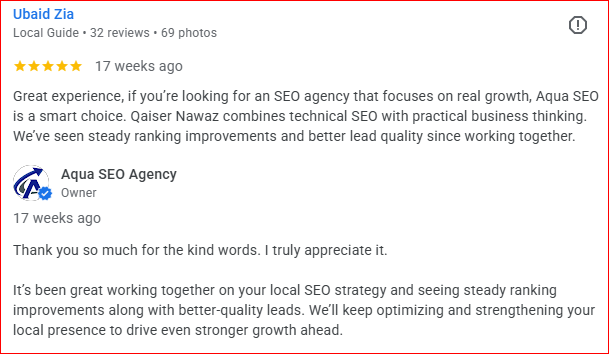
Keep the process simple. Respond to Every Review. Whether positive or negative, respond professionally.
Example:
Instead of saying “Thanks.”
Try:
“Thank you for trusting us with your HVAC repair. We’re glad our technician could solve the issue quickly.”
- Detailed responses show authenticity.
- Handling Negative Reviews
- Negative reviews happen.
A calm, respectful response can often strengthen trust more than a perfect five-star profile.
Why Review Recency Matters
Recent reviews signal ongoing business activity. A profile with fresh reviews often appears more trustworthy than one with dozens of outdated reviews.
Off-Page Local SEO
Strong local authority extends beyond your website.
Create Quality Local Backlinks to Improve Authority
Local backlinks provide search engines with information about the community or geographic area your business serves. Not all backlinks are equal.
A backlink from a trusted local organization is often more valuable for local SEO than a link from a random website with no connection to your business or industry.
Sources of High-Quality Local Backlinks
Good local backlinks can be obtained through:
- Local business associations
- Chambers of commerce
- Community organizations
- Local news websites
- Industry-specific directories
- Local event sponsorships
Example
A roofing company sponsored a community baseball team, which received attention from the local newspaper and the town’s website. As a result, the company gained local mentions and backlinks that helped improve visibility for service-area searches.
Additional Ways to Earn Local Backlinks
A local fitness center can earn backlinks by:
- Hosting neighborhood health promotion events
- Collaborating with local businesses
- Contributing expert advice to local newspapers, magazines, and media outlets
The objective should be to build genuine local relationships rather than collect hundreds of low-quality links.
Local Link Building Mistakes to Avoid
Avoid purchasing large numbers of directory links or spammy backlinks. These tactics may create short-term activity but rarely build lasting authority.
A Practical Local Link Building Process
A simple process for building local links includes:
- Identify relevant local organizations.
- Give them a reason to mention your business.
- Participate in community activities.
- Promote partnerships through your website and social media channels.
Local backlinks work best when they are naturally connected to your reputation and involvement within the community.
Quality vs Quantity in Local Link Building
Having a few backlinks from trusted local organizations is typically more beneficial than acquiring dozens of directory links from lower-quality websites.
Local PR Opportunities
Local businesses frequently overlook public relations.
Examples include:
- Community events
- Charity sponsorships
- Business awards
- Local partnerships
These activities often generate valuable mentions and links. Local Mentions Matter Too. Not every mention needs a backlink. Brand mentions across trusted local websites contribute to visibility and credibility.
How to Track Local SEO Results
If you cannot measure results, you cannot improve performance.
Google Business Profile Insights
Monitor:
- Calls
- Direction requests
- Website clicks
- Search visibility
These metrics reveal customer behavior.
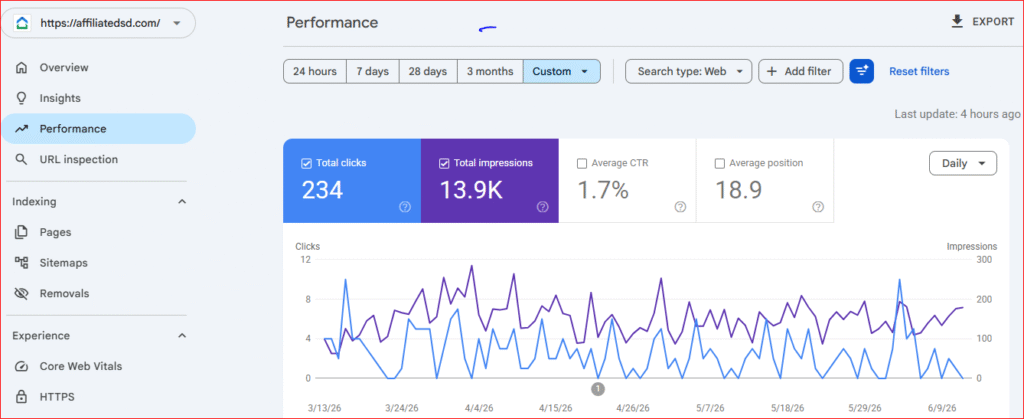
Google Search Console
Track:
- Keyword impressions
- Clicks
- CTR
- Indexed pages
This helps identify growth opportunities.
Use UTM Tracking
UTM parameters allow businesses to understand how much traffic originates from Google Business Profile listings.
This creates clearer attribution.
Monitor Local Rankings
Track:
- Map Pack rankings
- Organic rankings
- Location-specific keywords
Rankings alone do not matter. Leads and conversions matter most.
Local SEO Case Study
Let’s look at a simplified example.
Affiliated Mortgage
https://affiliatedsd.com/
Rapid City, USA
A local Affiliated Mortgage company struggled with visibility.
Problems included:
- Incomplete GBP
- Few reviews
- Weak location pages
- Inconsistent citations
Changes Implemented
Month 1:
- GBP optimization
- Citation cleanup
- Review request process
Month 2:
- New location page content
- Local schema implementation
Month 3:
- Local link-building campaign
- Results After 90 Days
Results included:
- Increased GBP visibility
- More phone calls
- Higher map rankings
- Improved organic traffic
- More appointment bookings
Performance
Before
After
Key Lessons
The biggest improvements came from fundamentals, not advanced tactics. The impression rise from 10.7k to 13.9k.Most local businesses can generate meaningful gains by improving basics consistently.
Common Local SEO Mistakes to Avoid
Many businesses unknowingly sabotage their own local rankings.
- Ignoring Google Business Profile
- An incomplete profile leaves ranking opportunities on the table.
- Inconsistent NAP Information
- Conflicting business information reduces trust.
- Thin Location Pages
- Low-quality location pages rarely perform well.
- No Review Strategy
- Reviews do not appear automatically.
- You need a process.
- No Performance Tracking
Without data, it’s impossible to know what’s working.
Conclusion
Local SEO is no longer optional for small businesses. Customers increasingly rely on Google Maps, local search results, and business profiles to make purchasing decisions.
The good news is that most local competitors are still missing important opportunities. By optimizing your Google Business Profile, improving local citations, earning reviews, creating location-focused content, and building local authority, you can significantly improve visibility and attract more qualified customers.
Start with the fundamentals.
- Fix your Google Business Profile.
- Clean up your citations.
- Build a review system.
- Create stronger local content.
- Track your results.
Small improvements made consistently often produce the biggest long-term gains in local SEO.
FAQs
How long does local SEO take to show results?
Most businesses start seeing early improvements within 30 to 90 days, but competitive industries may take longer. Consistent optimization, reviews, and local authority building accelerate results.
What should a small business prioritize first in local SEO?
Start with Google Business Profile optimization, NAP consistency, and customer reviews. These actions usually produce faster local visibility gains than advanced SEO tactics.
Can I rank locally if I don’t have a physical storefront?
Yes. Service-area businesses can still rank in local search by properly configuring their Google Business Profile, defining service areas, and building local relevance.
Are local citations still important in 2026?
Yes. Citations help search engines verify business information. Accurate and consistent listings across trusted directories support local trust and visibility.
How many Google reviews do I need to rank higher?
There is no fixed number. Focus on earning authentic reviews consistently. Quality, recency, relevance, and response rates often matter more than volume alone.
What is the biggest local SEO mistake businesses make?
Many businesses neglect their Google Business Profile or leave outdated information online. Inaccurate listings and weak review management often hurt rankings and trust.
Contact us for more information
Leave a Reply